
How Do I Advertise My Masonry Business?
Most digital advertising for a masonry business has one destination: your website. Whether someone finds you through local search, a social post, or a paid ad, they usually click to confirm three things fast. Do you do the work they need, do you look trustworthy, and is it easy to contact you.
If your webpage is unclear, slow, or thin on proof, ads get expensive. You pay for clicks that never turn into calls. A strong website fixes that. It makes every marketing channel work harder.
Why your webpage is the real advertisement
Digital ads create interest. Your webpage creates confidence.
For masonry, confidence comes from specifics: project photos, clear services, straightforward pricing signals, and a simple path to request an estimate. When your website does that well, you can spend less to get the same number of leads. Or spend the same and book more work.
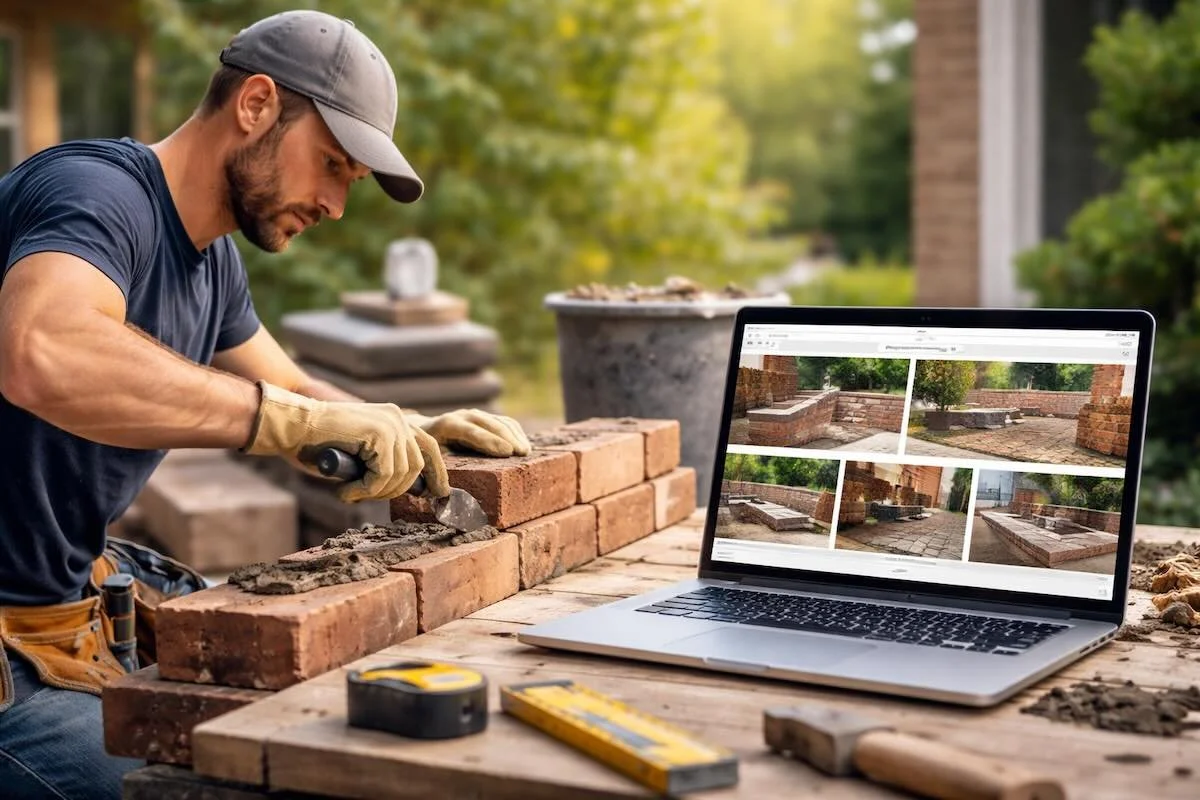
What a high converting masonry homepage needs
Your homepage should answer the core questions in seconds, especially on a phone. Keep it simple, scannable, and focused on the next step.
Above the fold: win the first 5 seconds
At the top of the page, include:
A clear headline that says what you do and where you work
One primary call button for mobile visitors
A short line that sets expectations, like free estimates, licensed and insured if true, or typical turnaround time if you can reliably deliver it
Avoid vague wording. People are not searching for “quality craftsmanship.” They are searching for a mason to solve a specific problem.
Proof, right away
Masonry is visual. Add a tight set of project photos early on the page, not buried in a gallery.
Choose photos that show:
Before and after changes
Wide shots that show straight lines and overall finish
Detail shots that show joints, transitions, and corners
A visitor should be able to tell in 10 seconds whether your work looks clean.
Services section that matches real searches
Most ads and searches are service specific. Your website needs service specific content.
List your core services in plain language. Examples include brick repair, tuckpointing, chimney repair, stone veneer, retaining walls, block work, pavers, and rebuilds. Only list what you actively want more of.
If you run ads, create a dedicated page for each money service. A single generic “services” page often underperforms because it feels too broad.
The best landing page structure for masonry ads
If you are running paid ads, do not send every click to your homepage. Use a landing page that matches the exact service in the ad.
A strong masonry landing page follows this order:
1. Service promise and service area
One sentence that says what you do, plus the cities or neighborhoods you serve.
2. Photo proof
Three to six images focused on that service. For example, tuckpointing photos should show joints clearly. Retaining wall photos should show level lines and finished caps.
3. Common problems you solve
Write a short paragraph that names the issues customers recognize. Cracked mortar, loose bricks, water intrusion, leaning sections, or spalling are common examples. Keep it factual and avoid diagnosing unseen conditions.
4. Your process
Explain what happens next in simple terms. Keep it short:
Inspection or site visit
Written scope and estimate
Scheduling and timeline
Cleanup and final walkthrough
5. Call to action
End with one action: call or request an estimate. Make the button easy to hit with a thumb.
Trust signals that matter for masonry
People worry about mess, safety, cost surprises, and durability. Your webpage should reduce those worries without making big promises you cannot control.
Add trust signals like:
Recent reviews and short customer quotes
Clear business name and contact info in the header and footer
Photos of your team at work, from a normal job site
Simple policies, like how you handle change orders or weather delays
If you have insurance, licensing, or certifications, state them clearly, but only if you can verify them.
Website mistakes that waste ad money
These issues are common in contractor websites and they quietly kill conversion rates:
No clear call button on mobile
Only one blurry hero photo with no real job proof
A form that asks for too much information up front
A generic page that tries to cover every service at once
Slow loading image galleries that visitors abandon
If you fix these, you often improve lead flow without increasing ad spend.
Reviews and photos: the content that makes your website believable
Ads can bring traffic. Reviews and project photos convert that traffic.
How to use reviews on your webpage
Feature a few recent reviews near your main call to action. Keep them short. Add more reviews on a dedicated reviews page so people can browse without losing the thread.
How to present project photos
Use small groups of photos tied to a service. A massive mixed gallery can feel random. Organize by job type so a chimney repair customer sees chimney repair proof first.
A simple website first advertising plan for masons
If you want a repeatable approach, build the webpage foundation first, then advertise.
Week 1: Upgrade your core pages
Homepage, contact page, and one page per core service you want more of. Add strong photos and clear calls to action.
Week 2: Add proof
Upload at least three project sets per core service. Request a handful of new reviews and feature the best ones on your main pages.
Week 3: Turn on local visibility
Make sure your business profile listings are complete and match your website contact information. Add your best photos there too.
Week 4: Start small paid ads
Run ads for one high intent service and send clicks to the matching landing page. Track calls and form submissions. Improve the page before increasing budget.
FAQ
Do I need a separate page for each masonry service?
If you advertise digitally, yes, it usually helps. It matches the visitor’s intent and makes it easier for them to trust you fast.
What should a masonry website include to get more leads?
Clear services, strong photos, visible reviews, and an easy way to contact you from a phone.
Should I send ads to my homepage or a landing page?
For paid ads, a service specific landing page tends to convert better because it stays focused on the exact job the person wants.
Conclusion
If you want to advertise your masonry business effectively, start with your website. It is where most digital ads lead, and it is the place where interest becomes trust. When your webpage is clear, fast, and packed with real proof, every other marketing channel becomes easier and cheaper.